Hi, I'm Eric.

I’m an avid world traveler, photographer, software developer, and digital storyteller.

I help implement the Content Authenticity Initiative at Adobe.

Search Results

Fort Columbia Historical State Park
85

Fort Columbia Historical State Park

visited 23 January 2022

First built around the turn of the 20th century to protect the Columbia River basin from maritime attackers, this fort now serves as a well-preserved reminder of life a century ago.

The state parks site claims this as one of the best-preserved coastal defense sites in the country.
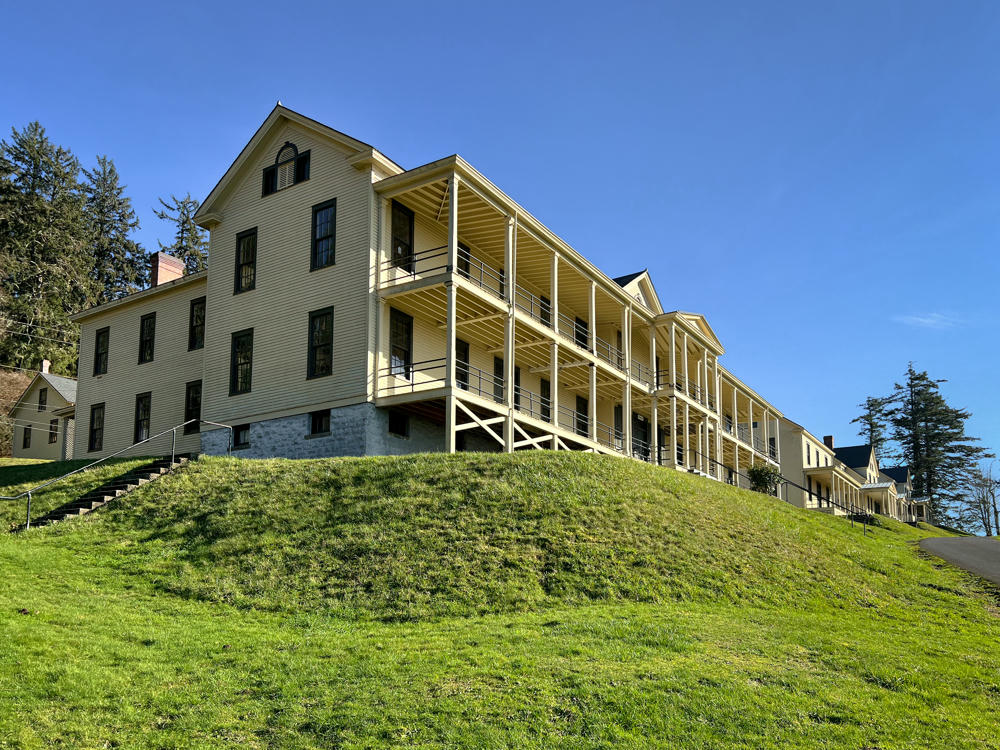
A large three-story cream-colored historic wooden building with tiered porches and columns sits atop a grassy hillside under a deep blue-purple sky, with a stone foundation, stairs leading up the slope, and evergreen trees flanking the scene.
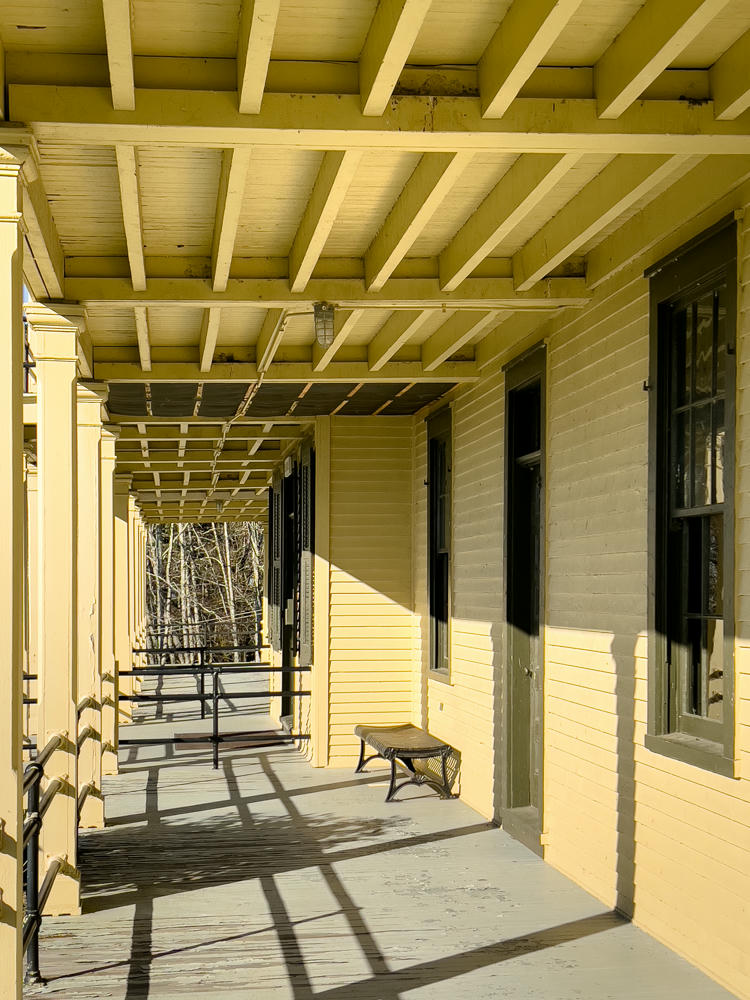
A long covered wooden porch of a pale yellow historic military building at Fort Columbia, with exposed rafters casting striped shadows across the plank floor, a metal railing along the open side, tall dark-framed windows, and a wicker bench against the wall; bare winter trees are visible at the far end.
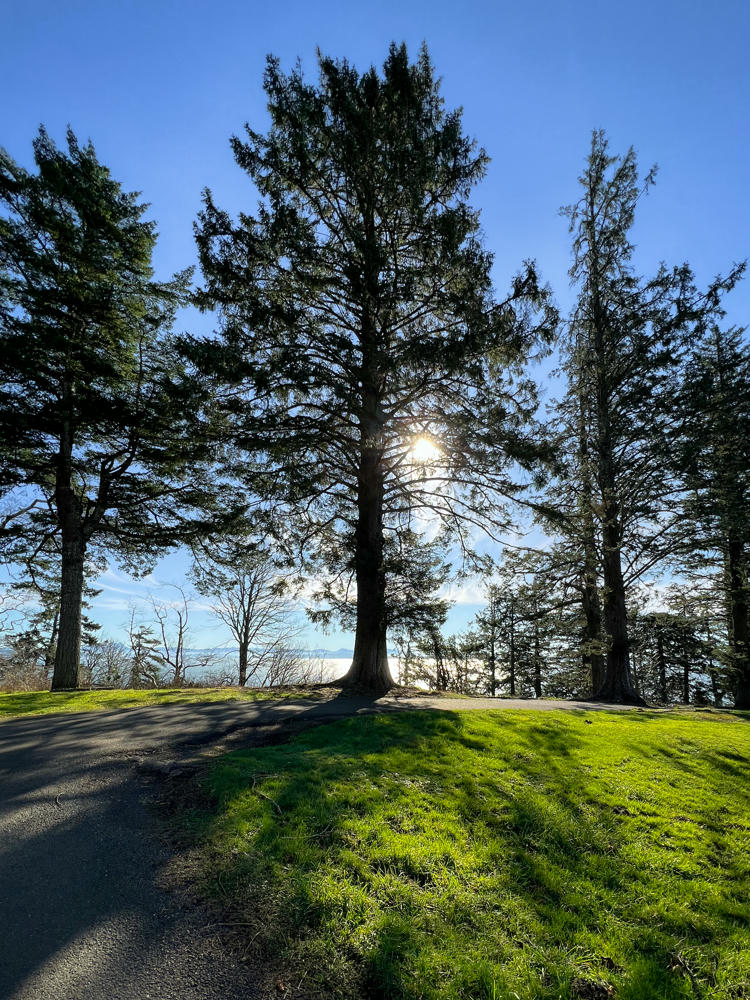
Tall evergreen conifers silhouetted against a deep blue sky, with the sun peeking through the branches of the central tree, overlooking a hazy view of water and distant hills. A paved path curves across the sunlit green grass in the foreground at a hilltop park.
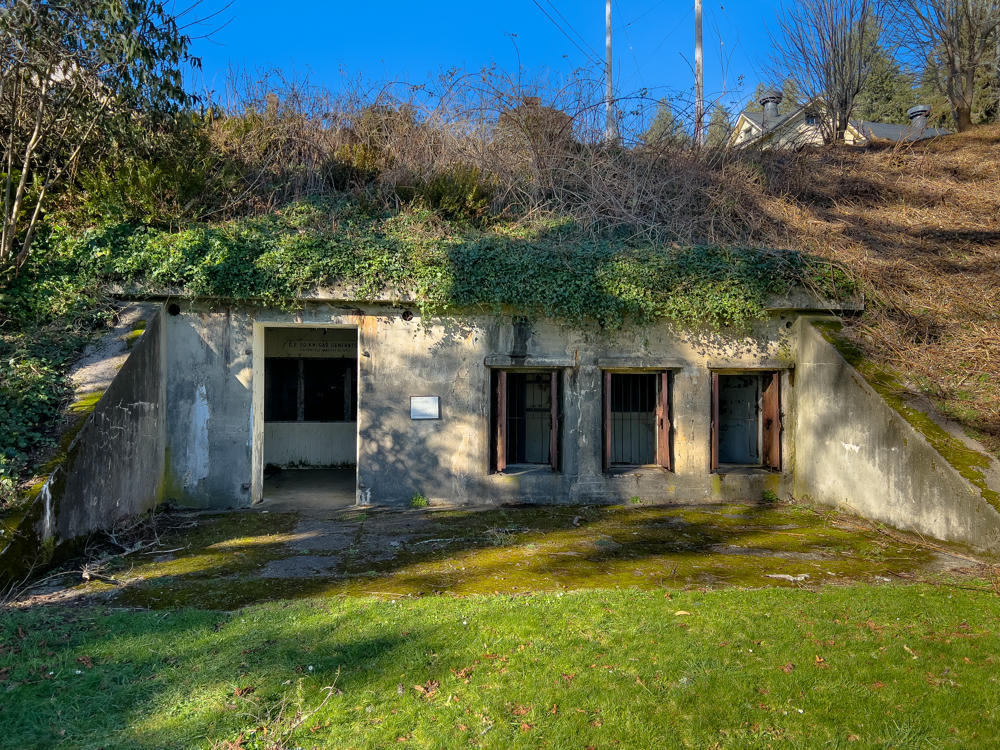
A weathered concrete military bunker built into a grassy hillside, with an open doorway on the left and several barred and boarded window openings, its roof overgrown with ivy and brush. Above the hill sit residential houses and tall antenna towers against a deep blue sky.
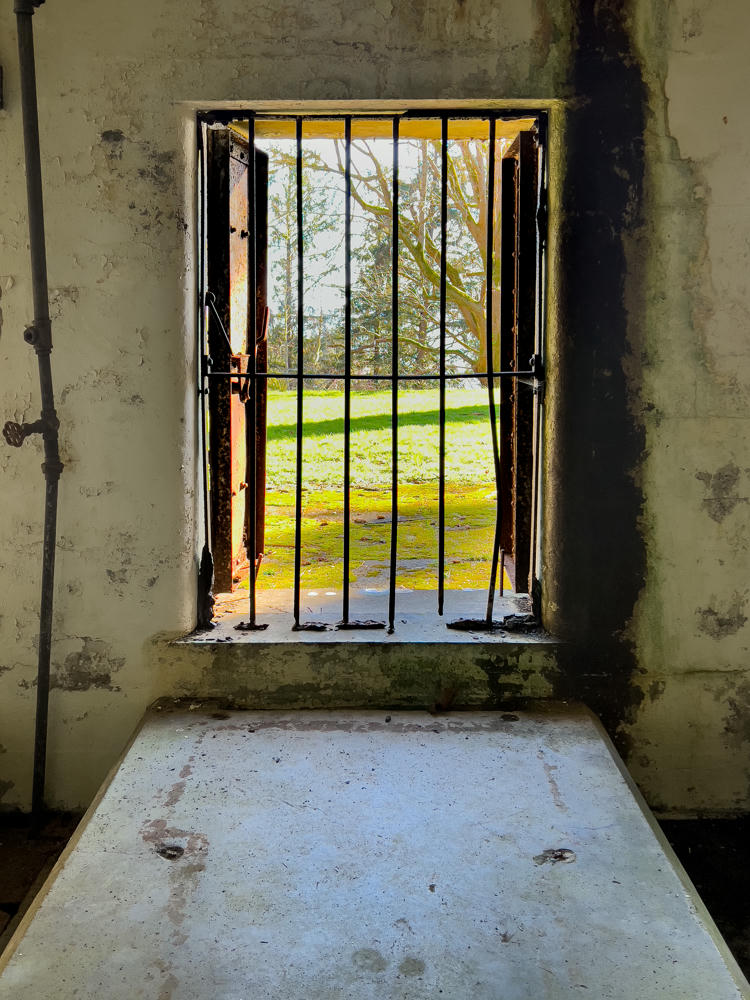
The interior of a derelict concrete room with peeling, water-stained walls and a barred window looking out onto sunlit green grass and bare trees. A rusted metal barred window frame stands open, an old pipe runs down the left wall, and a worn stone or concrete slab bed sits in the foreground.
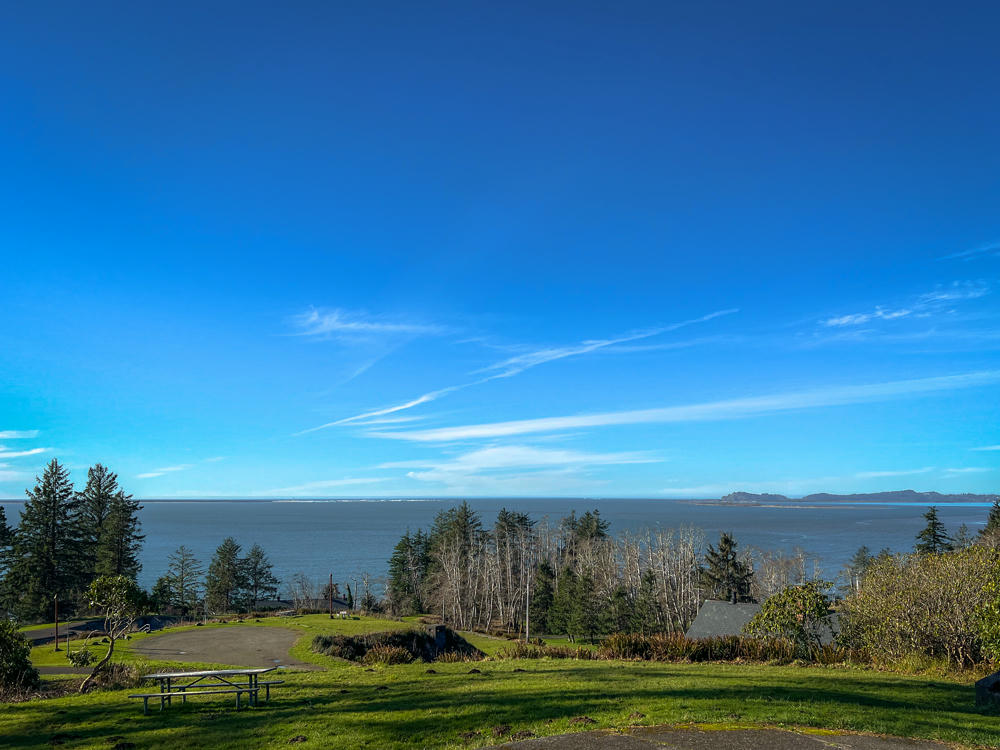
A grassy hilltop overlook at Fort Columbia Historical State Park with a wooden picnic table in the foreground, evergreen and bare trees below, and a wide view over the mouth of the Columbia River under a deep blue sky with wispy clouds.

This impressive gun never actually served battle here at Fort Columbia. The intended weapon wound up being declared obsolete before it could be installed. This one, of similar design, was brought in decades later when another US fort was decommissioned.
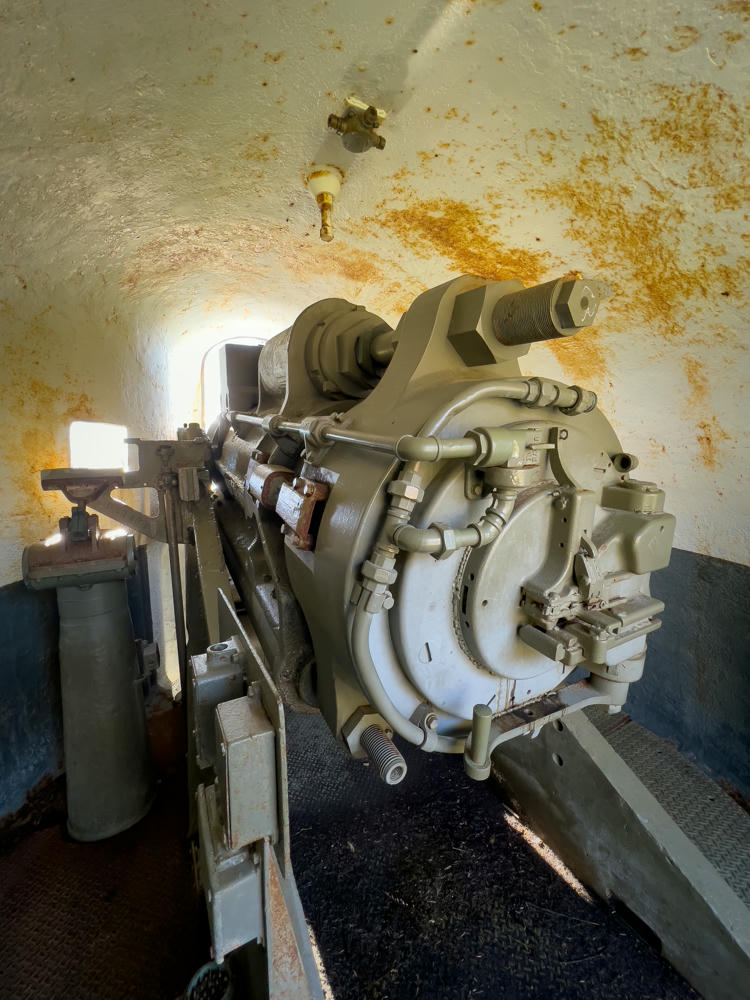
The breech end of a large gray coastal artillery gun mounted inside a curved concrete gun emplacement, with hydraulic lines, valves, and a hexagonal counterweight bolt visible; the whitewashed walls and ceiling are streaked with rust stains and daylight enters from an arched opening at left.

These ominous-looking doors guarded the bunker that was to be the seat of Washington’s state government in the event of a nuclear war in the 1960s.
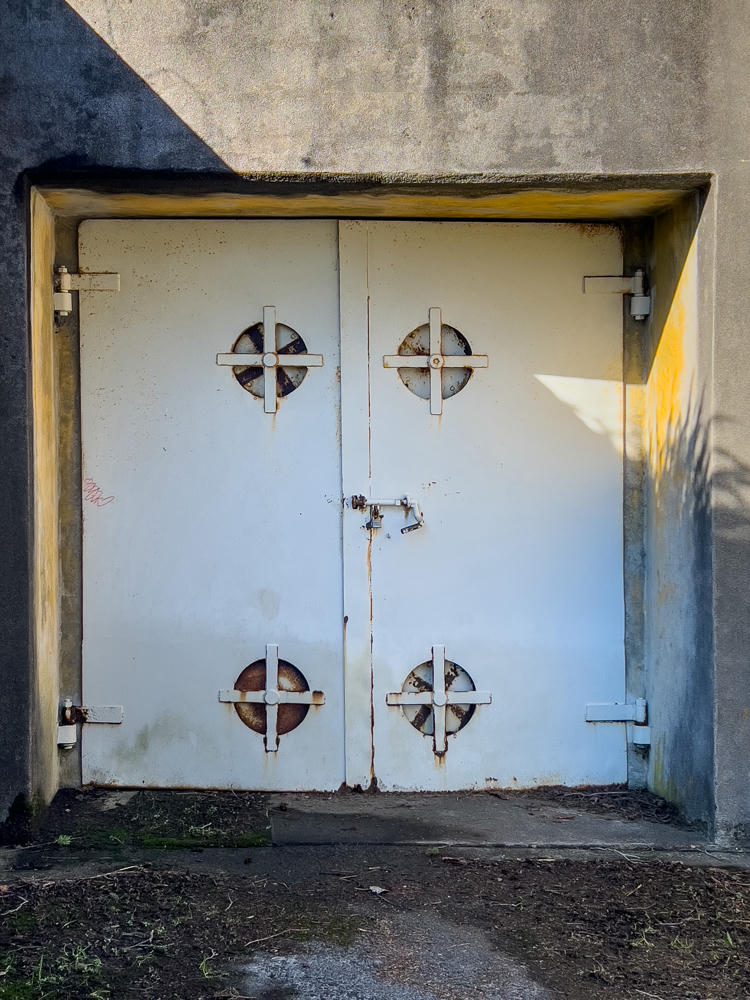
A pair of heavy white steel blast doors set into a weathered concrete bunker facade, each door fitted with two round crossbar-style locking wheels that are streaked with rust, and a central handle latch between them. Grass, dirt, and debris litter the ground in front of the recessed entryway, which is partly lit by afternoon sun.
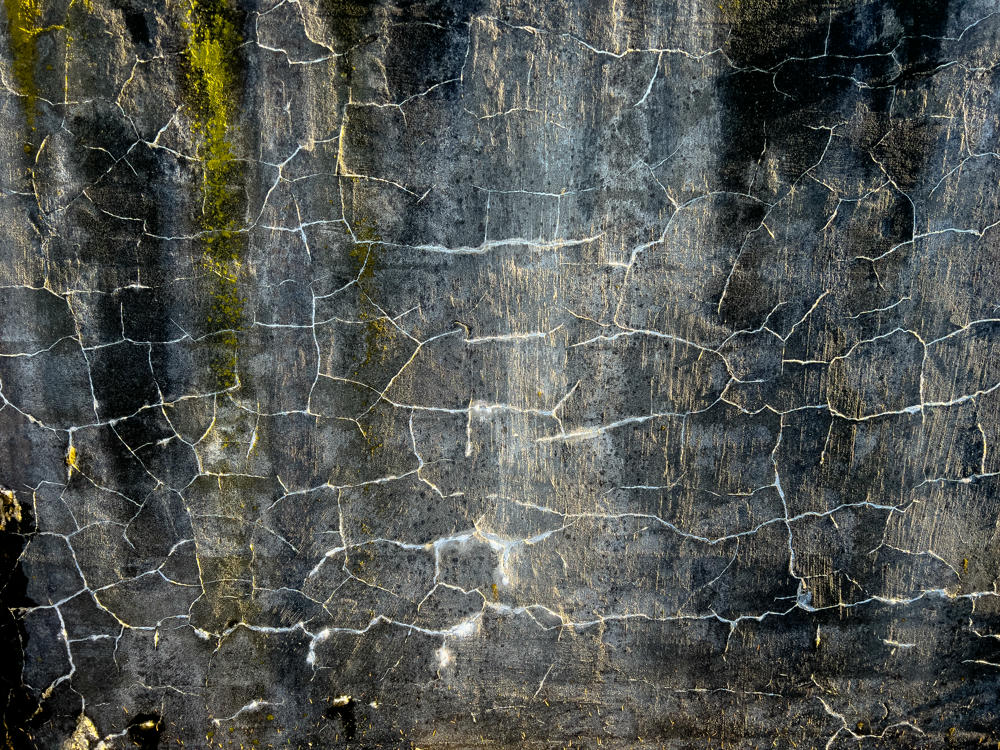
A close-up of a weathered gray concrete surface covered in an intricate network of hairline cracks, with patches of yellow-green lichen or moss along the upper left and dark chipped areas at the bottom edge.

From near the old theatre hall, you can see the now-decommisioned supply dock and across the river to the mountains and hazy lowlands just west of Astoria, Oregon.
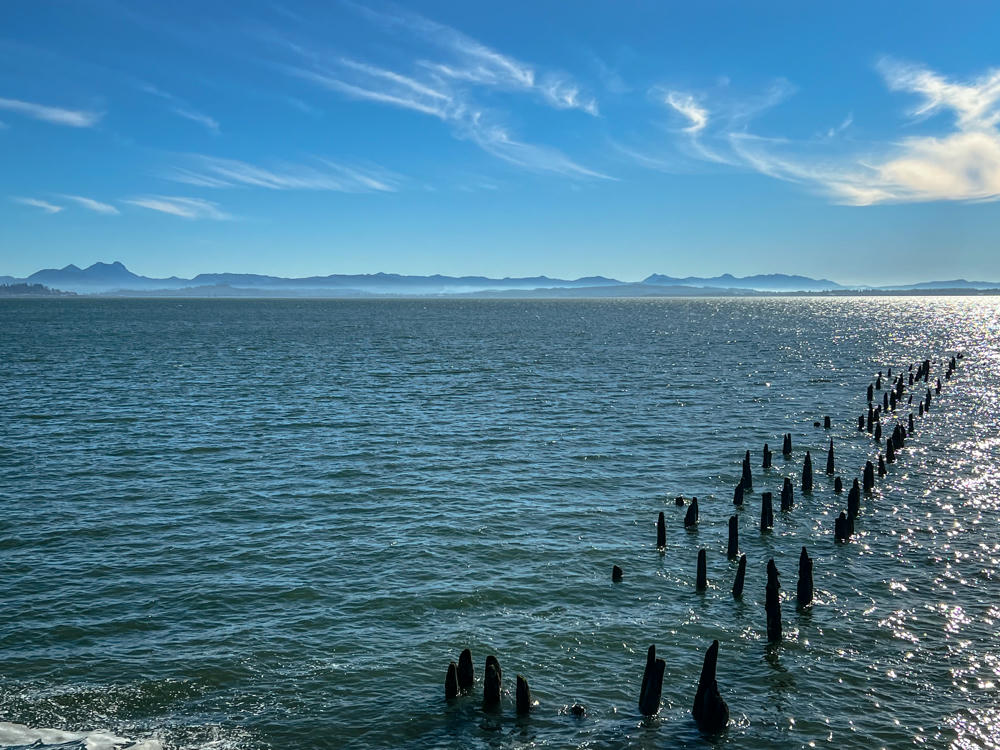
A row of weathered wooden pilings from a decommissioned supply dock recedes diagonally across sunlit, rippling water toward the horizon, where low hazy mountains rise beneath a blue sky streaked with wispy cirrus clouds.
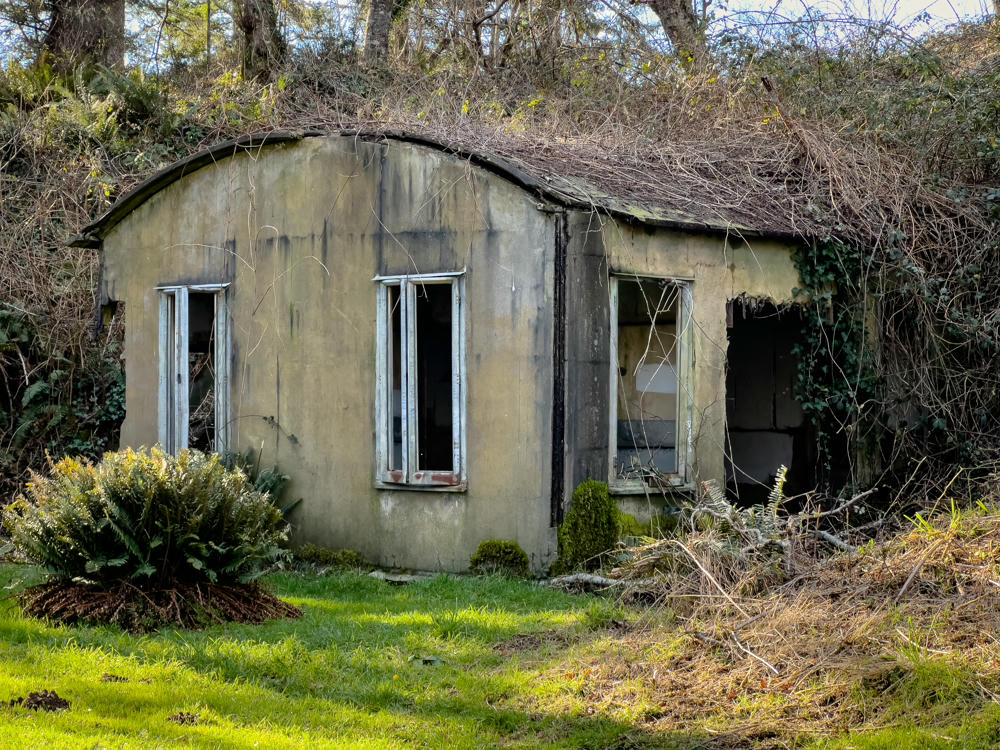
An abandoned concrete building with a curved barrel roof, its windows empty of glass and doorway gaping open, being overtaken by tangled dead vines and ivy. A large fern grows in the bright green grass in the foreground, with bare winter trees and dense brush surrounding the derelict structure.
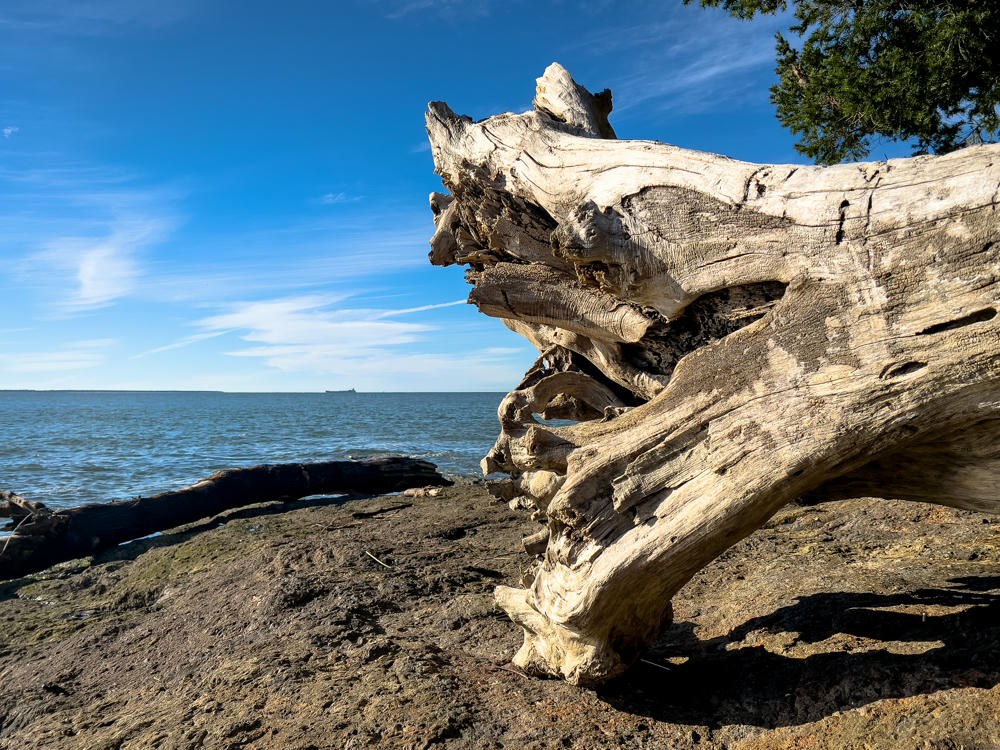
A large weathered driftwood log with twisted, sun-bleached roots rests on a rocky shoreline under a deep blue sky, with calm water and a distant cargo ship on the horizon. Green conifer branches hang into the frame at the upper right.
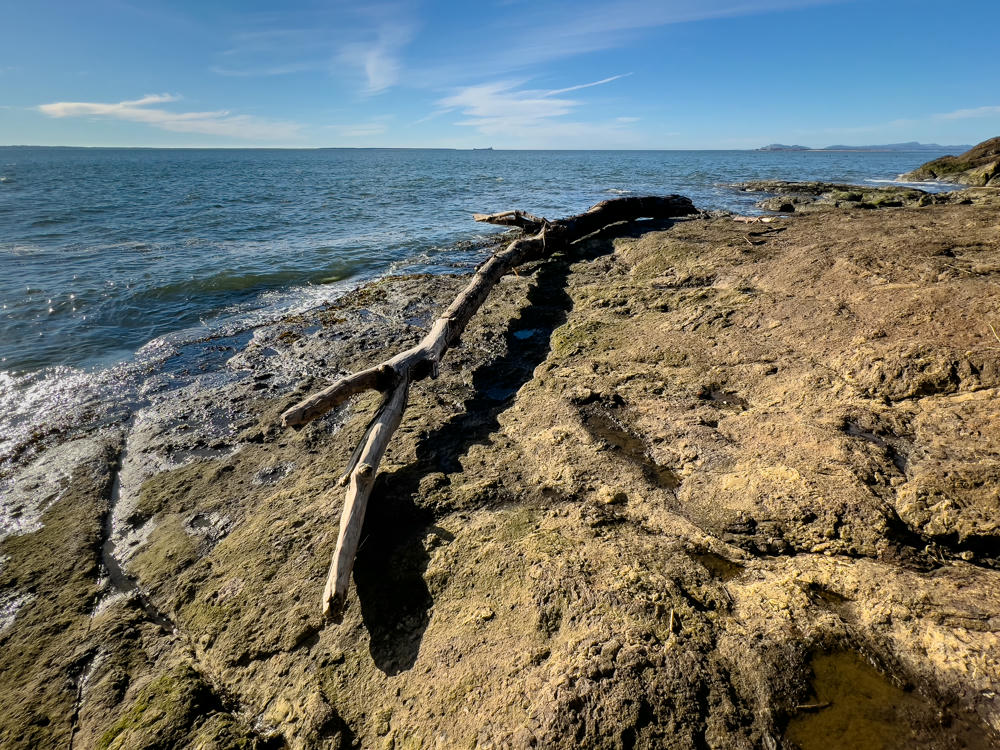
A weathered piece of driftwood lies along a rocky, tan-colored shoreline meeting calm blue water, with distant low hills and a hazy horizon under a bright blue sky streaked with wispy clouds.
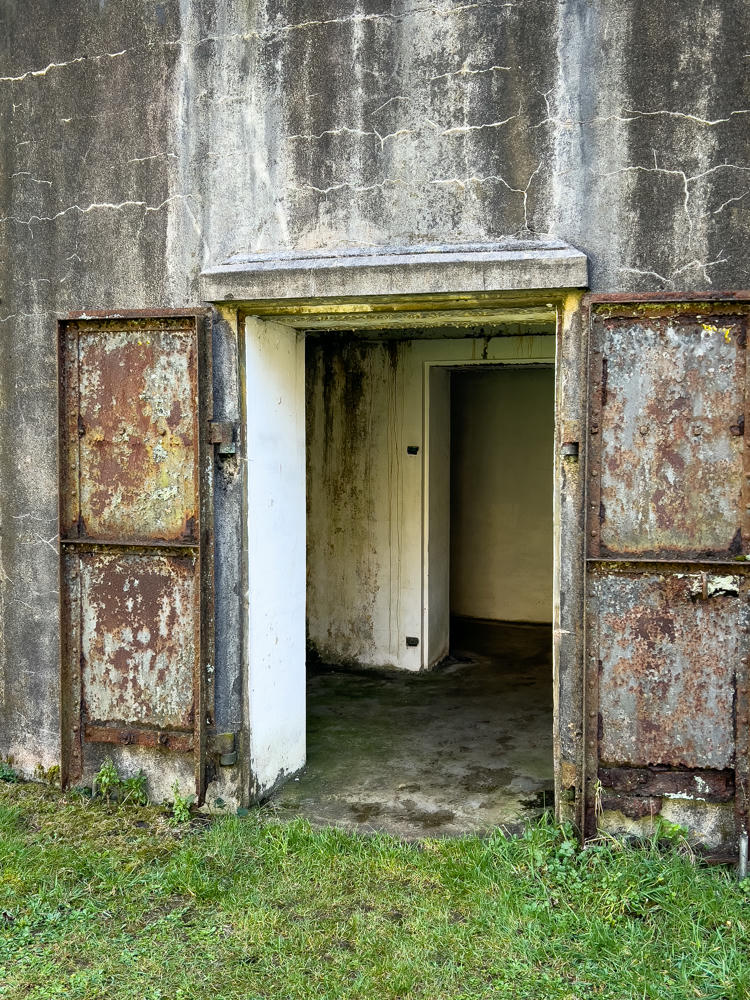
A weathered concrete bunker with two heavy, rusted metal doors swung open to reveal an empty white-walled interior room, with green grass growing in the foreground.
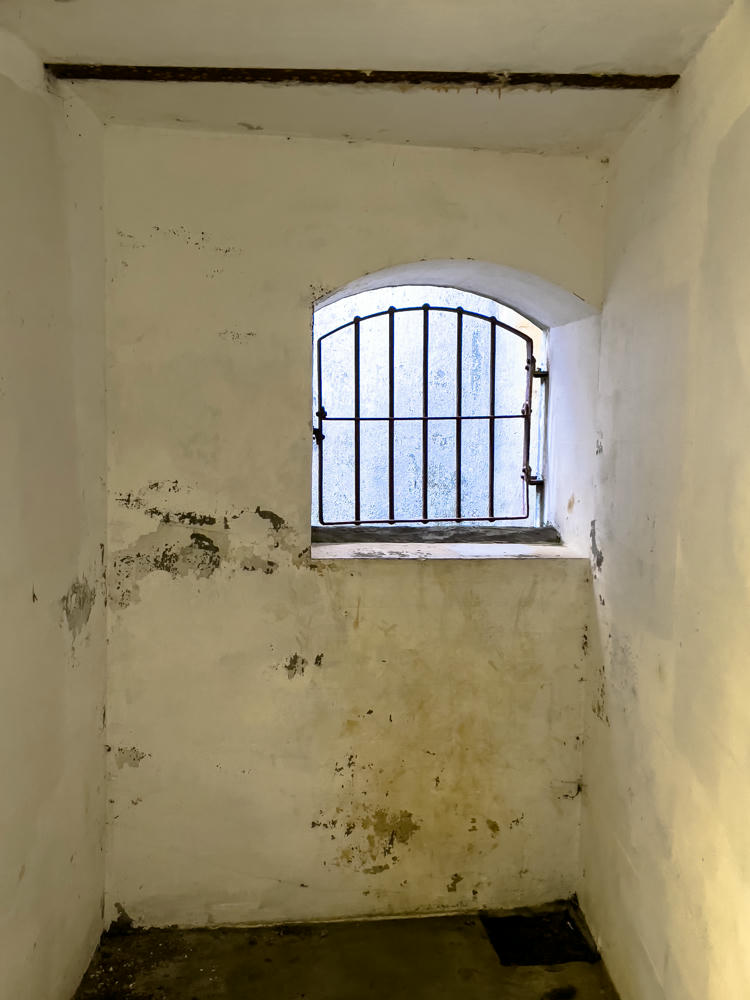
A small bare room with whitewashed, weathered plaster walls surrounding a single arched window fitted with black iron bars, letting in pale gray daylight through frosted glass. The floor is bare concrete and the walls show peeling paint and stains.
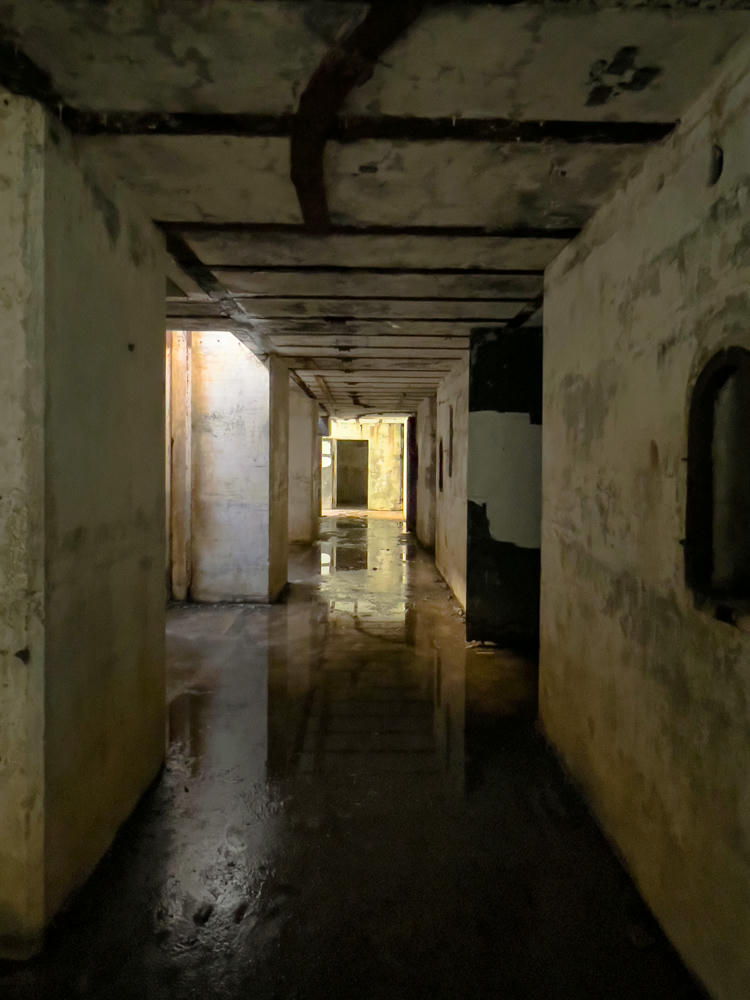
A dark, abandoned concrete corridor inside a military fortification, with peeling weathered walls and a heavy beamed ceiling. The wet, reflective floor mirrors faint daylight coming from a distant open doorway at the far end.
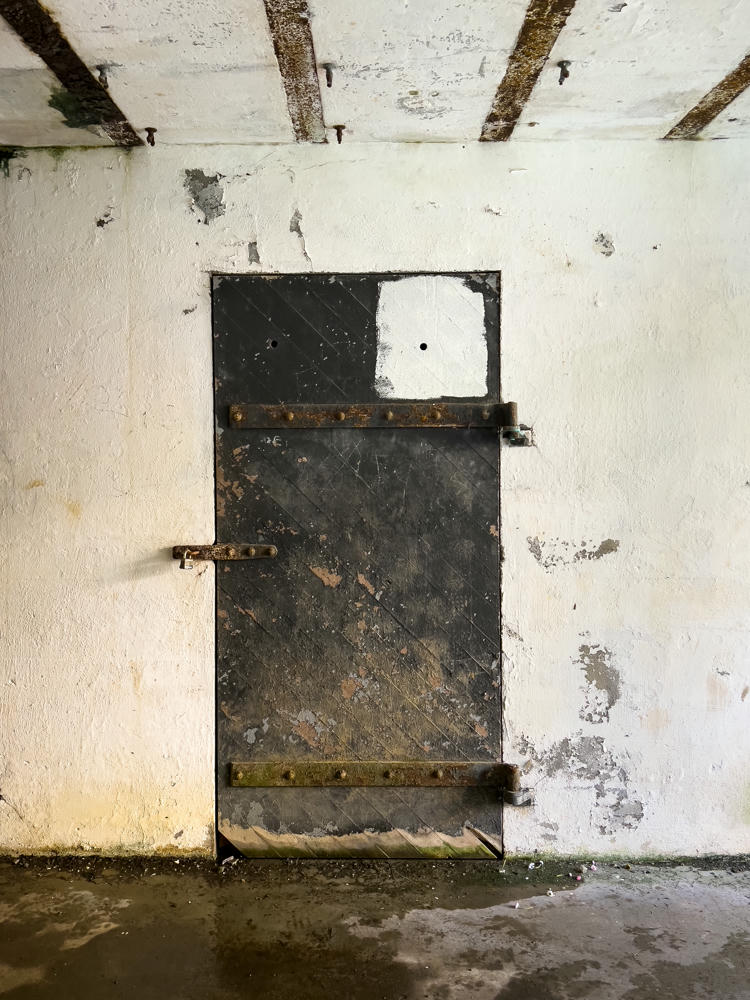
A heavy, weathered black metal door set into a whitewashed concrete wall inside an abandoned military bunker, with rusted hinges and strap bands, peeling paint, and a wet, stained concrete floor. A patched white square with a small hole is visible near the top of the door, and exposed rusted steel beams run across the ceiling.
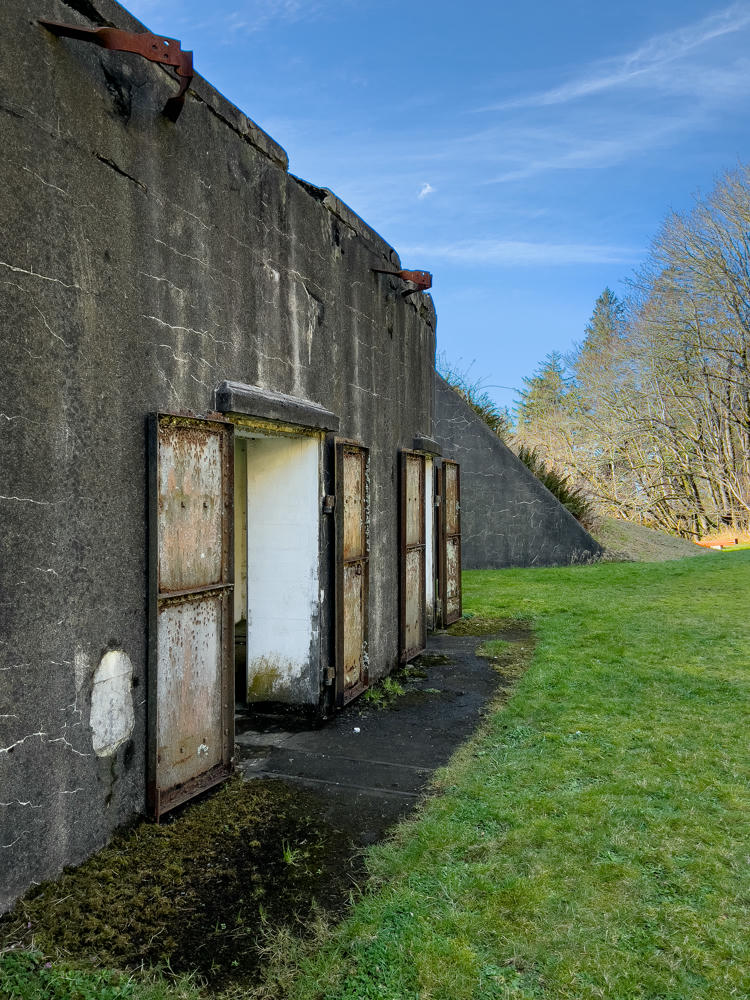
A weathered concrete military bunker with a row of heavy rusted steel doors standing open, revealing white-painted interior walls, set against a grassy field with bare and evergreen trees under a deep blue sky.

There are also a few miles of hiking trails above the fort complex; I opted not to explore those on this trip.

For more information:

If you’ve enjoyed this …

Subscribe to my free and occasional (never more than weekly) e-mail newsletter with my latest travel and other stories:

Or follow me on one or more of the socials: